

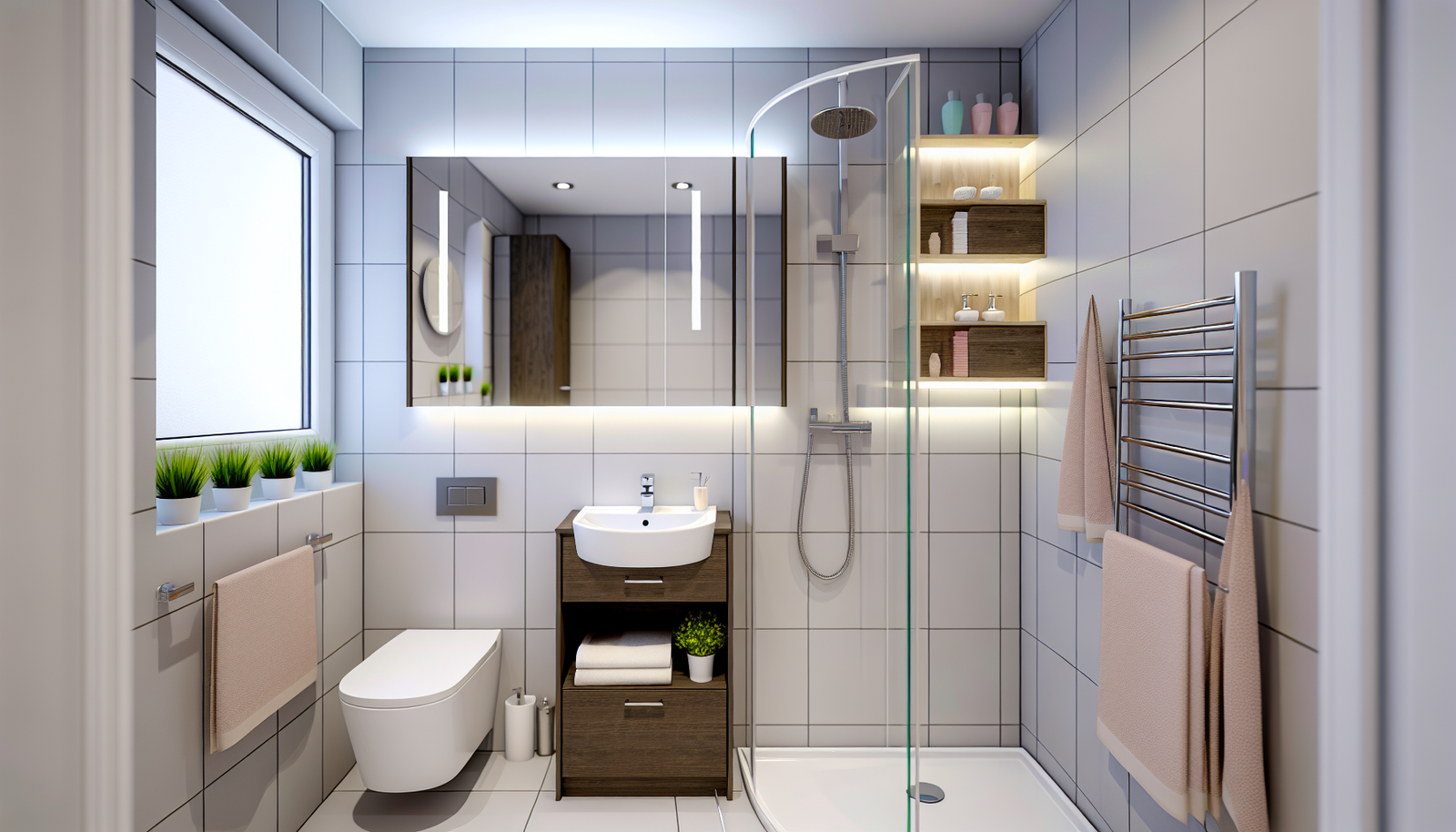
Small bathrooms demand clever design. This article explores practical, stylish bathroom ideas for compact spaces—including small vanities, sinks, showers, tiles, cabinets, and storage solutions—plus remodel strategies, material choices, and space-saving plumbing and lighting tips. You’ll learn measurable guidance, visual ideas, and step-by-step planning to maximize function and style in a small bathroom remodel and maintenance best practices for lasting results.
Planning and layout for compact bathrooms
Careful planning is essential for every small bathroom remodel, as tight dimensions leave little room for error. Since the modern bathroom relies on plumbing systems developed over centuries—like vented drains and standardized sinks (source: Wikipedia)—understanding existing layouts is key to efficiently updating plumbing, showers, and storage. The right plan can transform bathroom ideas small into reality, maximizing comfort and functionality even in the tiniest spaces.
- Accurate Room Measurement Checklist:
- Use a tape measure to record the length and width of your bathroom at floor level (in both inches and centimeters).
- Measure ceiling height from several locations.
- Mark the precise positions and swing directions of all doors, noting clearances.
- Locate and size windows, recording sill heights above the floor.
- Note visible plumbing stack locations and vent pipes.
- Draw your current fixture layout (toilet, vanity, shower, tub).
- Practical Fixture Size Guidelines:
- Toilet: minimum 30″ x 48″ (76 x 122 cm) for comfortable access (check local code).
- Small shower: at least 30″ x 30″ (76 x 76 cm) footprint; 32″ x 32″ (81 x 81 cm) is more comfortable.
- Small vanity bathroom sink: 18″–24″ (45–60 cm) wide; 16″–20″ (40–50 cm) deep for small bathrooms.
- Leave at least 21″ (53 cm) clearance in front of each fixture for circulation.
- Layout Strategies for Perceived Space:
- Wet wall layouts:
- Pros: Concentrate plumbing for lower cost; ideal for small bathroom remodels.
- Cons: Less flexibility to rearrange fixtures without major work.
- Centered/Linear layouts:
- Pros: Good if long room; easier access; maximizes bathroom storage on one wall.
- Cons: May limit shower size options.
- Wall-mounted or floating vanities:
- Pros: Create floor space, feel airy, easier cleaning below.
- Cons: Limited base storage, precise wall support needed, costlier install.
- Corner fixtures (sink, shower):
- Pros: Use awkward corners; open up central circulation in small bathroom ideas.
- Pocket doors & sliding shower doors:
- Pros: Remove swing arc for valuable floor space.
- Cons: Wall opening needed for pocket doors; sliders may need more maintenance.
- Wet wall layouts:
- Small Bathroom Remodel Prioritized Planning Checklist:
- Assess and upgrade ventilation for humidity control.
- Plan layered lighting for tasks and ambiance.
- Specify full waterproofing for showers/tubs and behind small bathroom sinks.
- Check if permit is needed for any plumbing rework.
- Choose compact yet functional bathroom cabinets and bathroom storage.
- Action Plan for Moving Forward:
- Measure and sketch as above.
- Record and map plumbing stacks and vents.
- Identify possible fixture swaps or relocations (per wet wall strategies).
- Consult local code for fixture spacing in your small bathroom remodel plan.
- Estimate a rough budget for your preferred bathroom ideas small based on fixture choices and finishes.
- Get permit and contractor estimates as needed.
Choosing the right vanity and small sinks
Smart choices in bathroom vanities and small sinks are essential as you refine your small bathroom layout. The design and function of a vanity trace their roots to 17th-century “vanity” or dressing tables, now evolved from decorative storage to a water-resistant base for sinks in compact baths. In small bathrooms, picking the right vanity affects daily convenience, storage, and even how spacious the room feels.
- Wall-mounted or floating vanities:
- Pros: Creates floor space, feels airy, easier cleaning below.
- Cons: Limited base storage, precise wall support needed, costlier install.
- Console vanities:
- Pros: Light visual weight, open shelves, slender frames ideal for tight layouts.
- Cons: Minimal hidden storage, exposed plumbing, less countertop space.
- Freestanding narrow cabinets:
- Pros: Offers drawers & doors, easy install, fits unique nooks (widths often 16–24″/40–60cm).
- Cons: Heavier look, can crowd circulation if too deep, dust beneath.
- Pedestal sinks:
- Pros: Tiny footprint, classic style, maximizes floor area.
- Cons: No storage, difficult to hide plumbing.
- Integrated sink-vanity units:
- Pros: One-piece, seamless look, easy clean-up, reduces leaks.
- Cons: Limited style options and storage sizes.
- Sink types for small bathrooms:
- Undermount: Flush install, countertop overhangs—best for 18–24″/45–60cm vanities.
- Drop-in: Simple retrofit, fits narrow surfaces, slightly reduces counter space.
- Vessel: Sits atop vanity, striking style, works with very shallow cabinetry (12–16″/30–40cm deep).
- Wall-hung: No cabinet needed—widths start at just 12″/30cm, ideal for micro baths.
- Corner sinks: Great for extremely tight layouts, needs only 16–18″/40–45cm minimum clearance from corners.
- Material options:
- Ceramic/Porcelain: Durable, glossy, stain-resistant, easy-clean (from Wikipedia: most common sink type).
- Fireclay: Dense, chip-resistant, elegant—pricier than porcelain.
- Stainless steel: Industrial vibe, low maintenance, fingerprint-prone.
- Composite: Stone-plastic blends, very durable, contemporary looks.
- Stone: Luxury feel, unique veining, needs regular sealing.
- Faucet & plumbing tips for small vanity bathrooms:
- Single-hole faucets reduce clutter.
- Route supply lines compactly; plan for shallow trap/drain set-ups in tight bases.
- Pair faucet spout height with sink depth (at least 4.5″/11cm from spout to bowl bottom) to prevent splash.
Integrated small bathroom storage solutions include deep drawers, pull-out trays, and in-drawer organizers.
- Vertical divider trays for makeup or toothpaste
- Pull-out bins for cleaning supplies
- Tiered shelf sliders for under-sink access
- Soft-close hardware keeps everything quietly accessible
Selection guide:
- Choose a wall-hung vanity or wall-hung small bathroom sink for minimal footprint and airy looks in very tight bathrooms.
- Opt for a narrow freestanding small vanity or compact bathroom cabinet if storage is a top priority; these suit small vanity bathrooms needing extra drawers.
- Vessel sinks work when you need visual impact or must use shallow cabinetry and pair well with filtered soft-close organizers for small bathroom storage.
Small showers and wet area strategies
Strategic planning for the small shower area is essential in any small bathroom remodel, since the configuration of plumbing and layout often places the shower in a corner or against a wall to maximize usable space. Modern showers have evolved from open bath stalls to compact, highly engineered enclosures, with designs driven by technical constraints like drainage slope, ventilation, and waterproofing detailed in historical references and shower construction guidelines.
Footprint and shape optimization begins with selecting a format that fits your space and circulation needs:
- Square and rectangular stalls: The typical minimum for comfort is 30″ x 30″ (76 x 76 cm) though rectangular layouts can be as narrow as 32″ x 36″ (81 x 91 cm).
- Neo-angle corner showers: Fit tight corners to allow more floor area elsewhere. Check that entry width is at least 20-24″ (51-61 cm) for code compliance and usability.
- Linear drain wet rooms: Use a curbless floor slope and large tile to permit open, walk-in showers; ideal for accessibility and visual expansion.
Shower enclosure types have a big impact on visual space and maintenance:
- Frameless glass:
- Pros: Minimalist, increases perceived space, brightens cavity.
- Cons: Higher cost, requires precise installation.
- Framed glass:
- Pros: Economical, sturdy, easy installation.
- Cons: Visible borders add bulk, more seams to clean.
- Sliding door:
- Pros: No swing clearance needed, ideal for tight layouts.
- Cons: Tracks require cleaning, may limit entry width.
- Pivot/hinge door:
- Pros: Full access to entry, modern look.
- Cons: Needs clearance to open, not ideal if obstructed by toilet or vanity.
- Shower curtain:
- Pros: Flexible, softens the space, budget-friendly.
- Cons: Needs frequent cleaning, can feel less upscale.
- Curbless/zero-threshold:
- Pros: Easiest for accessibility, seamless look, no step.
- Cons: Requires expert waterproofing, precise floor grading.
Waterproofing and drainage basics:
- Use a tile shower pan or a prefabricated pan for reliability in small showers.
- Ensure pre-sloped mortar or base to direct water to the drain (minimum 1/4″ per foot slope; ~2%).
- Consider linear drains for level-entry showers.
- Checklist:
- Install waterproof membrane on all wet surfaces.
- Seal corners, floor-to-wall transitions, and penetrations.
- Flood-test before tiling.
- Confirm all materials meet local plumbing codes.
Fixtures for small showers:
- Opt for compact valve sets or push-button diverters to save wall space.
- Hand shower combos on adjustable bars maximize flexibility.
- Low-flow showerheads (1.5–2.0 gpm/5.7–7.6 lpm) reduce water use but may affect pressure—choose models rated for comfort in small enclosures.
Smart layout for compact spaces:
- Place the shower furthest from the entry for privacy.
- Use glass or curtains for divider walls to maintain openness.
- Align the vanity and toilet on the same wall if possible for efficient plumbing and increased floor space in your small bathroom remodel.
Tiles finishes lighting and visual tricks to enlarge space
Finishes and lighting can dramatically transform small bathrooms, often making as much difference as the physical layout when it comes to how spacious the room feels. The strategic use of small bathroom tile, reflective materials, and great lighting doesn’t just boost style—it can visually stretch compact footprints and brighten spaces, which is essential for any successful bathroom remodel.
Tile selection is foundational. Ceramic tiles offer affordability, hundreds of patterns, and good water resistance, making them a classic choice for small bathroom tile. Porcelain, denser and less porous, brings added durability—ideal for high-traffic or wet areas. Large-format tiles with rectified edges (machine-cut for exact sizing) minimize grout lines, helping floors or walls appear less cluttered. Smaller mosaic tiles, meanwhile, provide better slip resistance in showers but can create busier patterns if not carefully coordinated with the rest of the finishes.
Grout color and width play a critical role. Matching grout to your tile, especially with narrow grout lines, creates a seamless look that tricks the eye into reading unified surfaces, rather than a patchwork. Consider these space-enhancing tile patterns:
- Horizontal stacked subway tiles—widen walls.
- Large-format tiles set vertically—heighten ceilings.
- Diagonal layouts—add movement and a sense of depth.
Glossy, reflective materials bounce light and create an airy feel. Glass shower doors, polished large-format tiles, and light-colored grout all lift the sense of space. Add:
- Full-wall mirrors or mirrored cabinets above a small vanity bathroom.
- Glass shelves to keep small bathroom storage light and open.
Lighting is key. Layer ambient ceiling lights with LED strips beneath vanities and behind mirrors for added dimension. Use vent fan/lights for combined function, and favor recessed LED ceiling fixtures for an uncluttered look. Lighting guide:
- Vanity lighting: 1500–2000 lumens
- General/ambient: 2000–3000 lumens for a small bathroom remodel
Choose durable, easy-to-clean surfaces—porcelain, sealed grout, and mildew-resistant paint—to keep your remodel looking fresh despite daily use. These low-maintenance finishes support both hygiene and long-term shine, complementing all your bathroom ideas for compact, stylish living.
Smart storage cabinets remodeling and long term maintenance
Building on the value of layout, vanity selection, and tile finishes for compact spaces, a strategic approach to bathroom storage ensures both daily convenience and lasting organization in every small bathroom remodel. Optimizing your bathroom cabinet choices makes the most of limited square footage while adding needed function.
Key types of small bathroom storage and cabinets:
- Recessed medicine cabinets
- Benefits: Flush to wall, maximizes space, can combine mirror and storage
- Typical dimensions: 16–24” wide, 4” deep, 26” high
- Considerations: Requires wall cavity; check for plumbing/electrical conflicts
- Tall slim cabinets
- Benefits: Vertical storage, fit narrow gaps, hide clutter
- Dimensions: 12–18” wide, 60–84” high, 12–16” deep
- Considerations: Anchor securely to wall, avoid door swing conflicts
- Mirrored cabinets
- Benefits: Dual function of reflection and storage, enhances light
- Most common: Above sink, 24–36” wide
- Considerations: Recessed or surface-mount, check mirror quality
- Open shelving
- Benefits: Airy feel, flexible placement, suits baskets and décor
- Common sizes: 24–36” shelves, 8–12” deep
- Considerations: Best for towels/toiletries, keep clutter minimal
- Under-sink pull-outs
- Benefits: Makes use of under-vanity cavity, easy access
- Dimensions: Customizable to vanity; 18–30” wide units
- Considerations: Account for plumbing traps
- Recessed shower niches
- Benefits: Streamlined bottle storage, no protrusion
- Typical: 12–16” wide, 12–24” high, 4” deep
- Considerations: Waterproofing crucial, plan before tiling
- Over-toilet cabinets
- Benefits: Uses dead space, extra shelves for essentials
- Common: 24–30” wide, 28–36” high
- Considerations: Leave access for tank maintenance
Steps for planning built-in bathroom storage:
- Assess current and future small bathroom storage needs
- Select target wall or nook locations to avoid walkways
- Identify plumbing/electrical lines before cutting into walls
- Pick moisture-resistant materials: MDF, marine plywood, laminate, or powder-coated metal
- Choose durable soft-close hardware and rustproof fasteners
Budgeting and timeline checklist:
- Obtain permits for wall changes or electrical relocation
- Hire a licensed plumber/electrician for in-wall utilities
- DIYers can install open shelves and assemble simple cabinets if experienced
- Prioritize spending:
- Structure/plumbing
- Waterproofing
- Fixtures (small bathroom cabinet, vanities, hardware)
- Finishes (paint, tile)
- Labor contingency
Maintenance for smart bathroom storage:
- Clean grout, shelves, and pulls weekly with non-abrasive cleaners
- Check and reseal caulking twice a year
- Run exhaust fan after showers to reduce moisture
- Replace worn hinges, pulls, and cabinet liners every 5–7 years
Action checklist for readers:
- Measure and inventory current small bathroom storage
- Pick storage types to fit your space and routine
- Schedule necessary trades and permits
- Choose easy-maintenance finishes for all bathroom cabinets
- Plan for long-term care to keep your remodel looking fresh
Conclusions
Smart small bathroom design combines the right small vanity, sink, shower layout, tile choice, and clever cabinet storage to boost functionality and style. By following measured planning, material selections, lighting, and storage strategies outlined here, homeowners can achieve an efficient small bathroom remodel that feels larger, functions better, and stays low-maintenance. Start with layout, prioritize durable finishes, and plan realistic budgeting and ventilation for long-term success and comfort.